Skip to content
Ethan Fung

Ethan Fung

Robotics & ML Software Engineer

Software Engineering student at the University of Waterloo. I build robots end to end, from CAD and firmware to the perception and learning that drive them.

Based in
Waterloo, ON
Studying
Software Engineering, University of Waterloo
Focus
Robotics, embedded systems, ML
Open to
Winter 2027 co-op (Jan–Apr)

Tech stack

Languages

  • Python
  • C++
  • C
  • TypeScript
  • Java
  • MATLAB
  • Bash
  • SQL
  • Verilog

Robotics & controls

  • ROS 2
  • Nav2
  • Gazebo
  • Isaac Sim
  • MuJoCo
  • PyBullet
  • Unity
  • Foxglove
  • Simulink
  • motion planning
  • PID
  • sensor fusion

ML & perception

  • PyTorch
  • diffusion policies
  • imitation learning (BC/DAgger)
  • RL
  • CUDA
  • ONNX
  • Gymnasium
  • Stable-Baselines3
  • XGBoost
  • OpenCV
  • YOLOv8
  • MediaPipe
  • NumPy
  • pandas

Embedded & hardware

  • ESP32
  • Jetson
  • CAN
  • UART
  • LiDAR
  • SolidWorks
  • CNC
  • soldering

Software & tools

  • Linux
  • Git
  • Docker
  • GitHub Actions
  • pytest
  • FastAPI
  • React
  • Next.js
  • PostgreSQL

Experience

  1. Dr. Robot Inc. (IOAI Canada)

    AI & Robotics Systems Intern

    • Scan 40 s → 12 s
    • 96% valid captures

    May 2026 — Aug 2026Richmond Hill, ON

  2. WAT.ai

    Robotics Software Engineer, ML Team

    • Recovery 38.5% → 79.5%
    • 12.7× faster sampling

    May 2026 — presentWaterloo, ON

  3. Toronto Metropolitan University

    Robotics Research Assistant

    • 3 mm accuracy
    • 2 papers + 1 talk

    Jun 2024 — Jul 2025Toronto, ON

  4. International Olympiad in Artificial Intelligence

    Team Canada Competitor

    • Canada's top scorer
    • Beijing 2025

    Jul 2025 — Aug 2025Beijing, China

  5. FIRST Tech Challenge

    Software Lead & Team Captain

    • World #6 · #8
    • 3× Ontario champions

    6 seasonsMarkham, ON

Projects

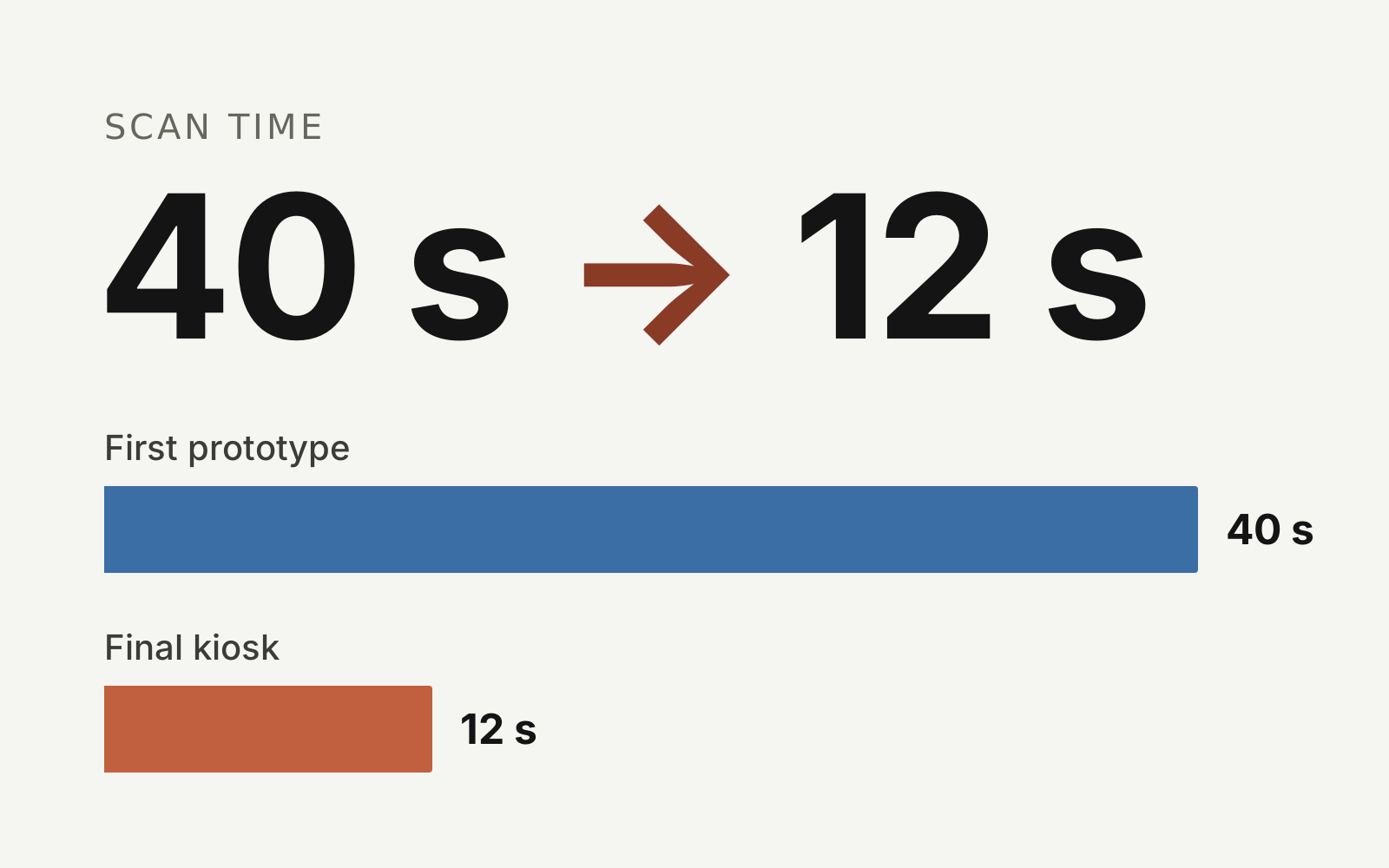
Scan time cut from 40 seconds on the first prototype to 12 seconds on the final kiosk.

2026

Skin-assessment kiosk

A walk-up kiosk that finds your face, aims three cameras and returns a skin assessment in 12 seconds.

  • Robotics
  • Software
  • Vision
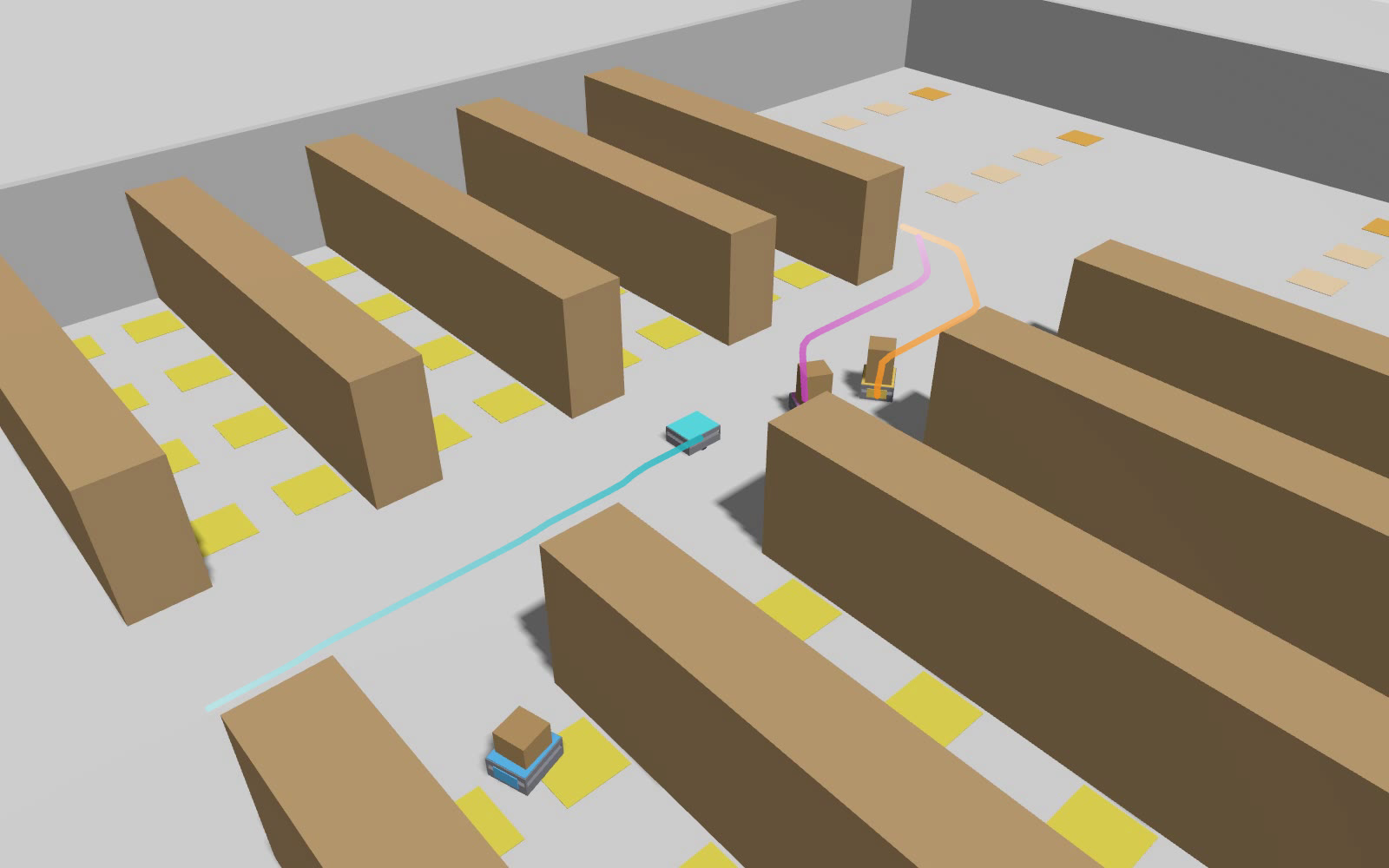
A real Gazebo run of the default five-robot setup: each robot's reserved path is drawn ahead of it as two robots meet at an aisle junction.

2026

SwarmFlow

A warehouse digital twin where a fleet of robots predicts each other's moves instead of waiting on a traffic controller.

  • Robotics
  • Software
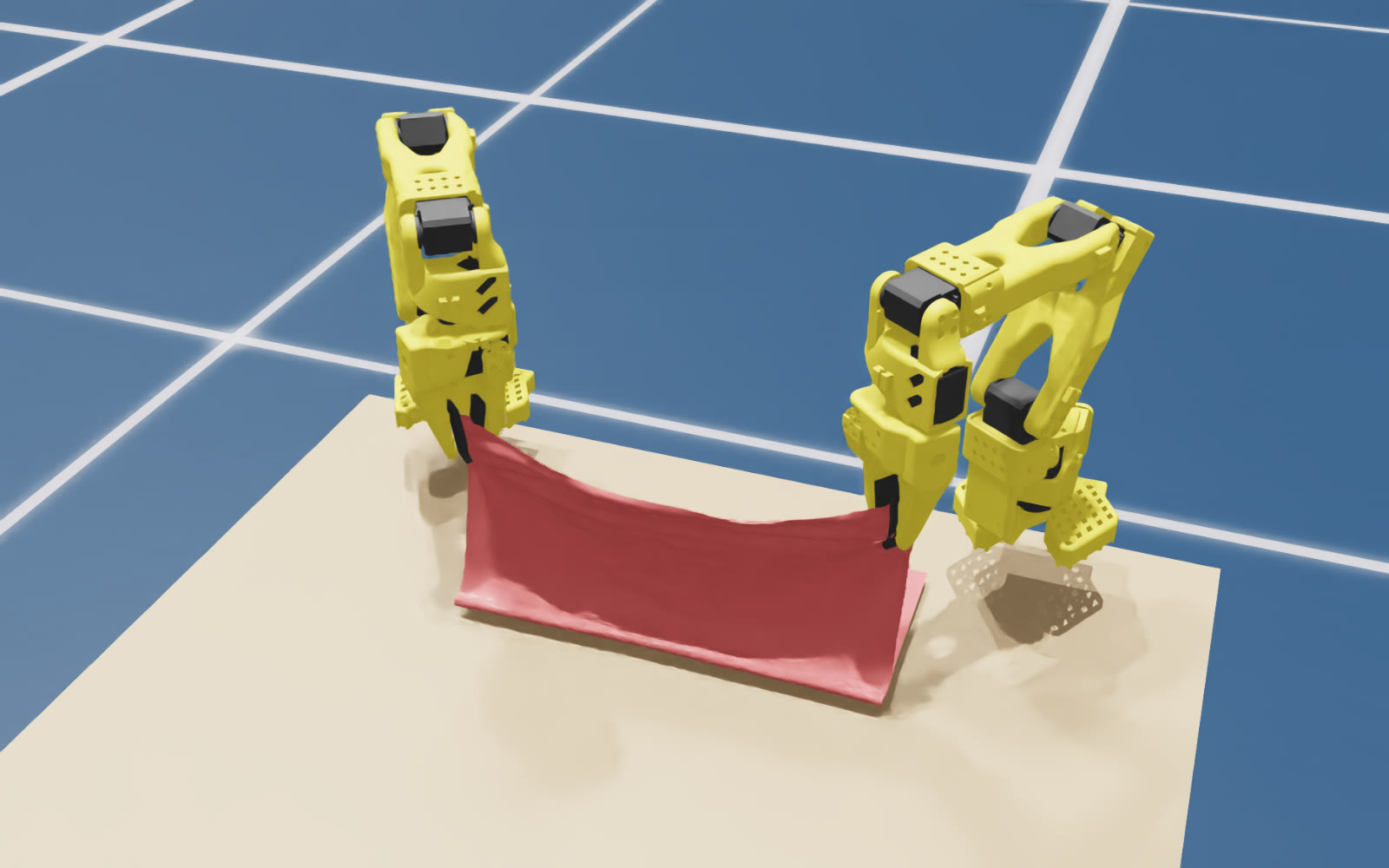
Isaac Sim, friction-only grasp: both SO-101 arms lift and carry the first fold of a quarter fold. A real expert episode (seed 660000), which succeeds.

2026

WorldFold

Teaching two robot arms to fold laundry, with simulation, imitation learning and RL before real hardware.

  • Robotics
  • ML

3 mm end-effector accuracy

2024

Six-axis research arm

A robot arm I designed, machined and wired myself to benchmark analytical against learned inverse kinematics.

  • Robotics
  • Controls
  • Mechanical

1 core inference budget for a whole GRU ensemble

2026

Connectome

Streaming time-series prediction over 31 GB of sequences, with a GRU ensemble squeezed onto one CPU core by a hand-written C kernel.

  • ML

#6 · #8 World Championship

2024

FTC competition robotics

Autonomy for competition robots: odometry, sensor fusion, vision and state machines across six seasons.

  • Robotics
  • Controls
  • Software

More work

  1. 2026

    Job Appy

    My own job-search pipeline: pulls postings, ranks my real experience against them, builds a one-page résumé.

    • Software
    • AI
  2. 2026

    LLM-assisted CRM query system

    Plain-English questions over messy CRM data, without ever letting the model write database code.

    • Software
    • AI
  3. 2026

    MooseTrax

    Upload a workout video and get rep-by-rep form scores and an annotated replay with coaching cues.

    • Software
    • Vision
  4. 2026

    Orbit Wars

    Solo Kaggle strategy agent that ranked in the top 250 of 4,700+ teams before the finals.

    • Software
    • AI
  5. 2026

    WATonomous navigation stack

    ROS 2 C++ navigation for a simulated robot: lidar costmap, mapping, A* planning and pure pursuit.

    • Robotics
    • Software
  6. 2025

    Badminton motion analysis

    Court mapping and player tracking from match footage, for a proposed robot coach.

    • Vision
    • ML
  7. 2025

    ChessHacks 2025

    Hackathon chess engine with Stockfish-labelled self-play data, a ResNet evaluator and alpha-beta search.

    • Software
    • ML
  8. 2025

    Hint-to-word retrieval

    Matches cryptic hints to words offline under a 1B-parameter cap, at 2.8× the baseline score.

    • ML
  9. 2025

    Satellite rainfall segmentation

    Finds rain in 18-channel satellite imagery: 0.86 IoU against a 0.20 baseline.

    • ML
    • Vision

Recognition

Awards

  • Scotiabank Software Engineering Entrance ScholarshipWaterloo · 2025
  • President’s Scholarship of DistinctionWaterloo · 2025
  • 2nd-place Design Award, World ChampionshipFIRST Tech Challenge · 2023
  • 3× Ontario Provincial ChampionFIRST Tech Challenge · 2022–24
  • 2× Control Award, Ontario ProvincialsFIRST Tech Challenge · 2023, 24
  • Chief Scout’s AwardScouts Canada · 2023
  • Canadian Computing Competition, DistinctionCEMC · 2025
  • Euclid Mathematics Contest, DistinctionCEMC · 2025

Publications & talks

  1. Paper · 2024Exploring Analytical and Deep Learning Solutions for High-Degree-of-Freedom Inverse KinematicsJournal of Physics: Conference Series
  2. Talk · 2024A full-stack six-axis manipulation systemIC-MSQUARE 2024
  • Software engineer
  • Robot builder
  • Avid hockey defenseman
  • Amateur Queen’s Gambit player
  • R&B enthusiast
  • Blitzcrank enthusiast
  • Robot whisperer
  • Smite-timing purist

Dr. Robot Inc. (IOAI Canada)

AI & Robotics Systems Intern

May 2026 — Aug 2026Richmond Hill, ON

  • Scan 40 s → 12 s
  • 96% valid captures

Overview

I was the only engineer on a walk-up skin-assessment kiosk for pharmacies, built with the Skin Management Institute, and I also worked on the motion control of a rover arm. The kiosk's analysis model was supplied; I built everything around it.

Skin-scanning kiosk

A three-camera gantry kiosk that guides a visitor into position and returns a skin assessment. Scan time fell from 40 seconds to 12, valid captures rose from 40% to 96%, and 1,038 tests cover it. The full story is in the kiosk case study.

Rover-arm motion control

  • Wrote CAN drivers for the arm's CyberGear and J60 joint motors (MIT-style torque, Kp and Kd frames) on a ROS 2 LiDAR-SLAM rover.
  • Traced shoulder and elbow jitter to gravity: added gravity-compensation feedforward and tuned impedance over quintic trajectories.
  • Cut planning time by 24% with DQN-guided RRT, collision-checking every path before it runs on hardware.

Stack

SolidWorks · ESP32 C++ · Python · FastAPI · React · TypeScript · MediaPipe · YOLOv8 · CAN · ROS 2

WAT.ai

Robotics Software Engineer, ML Team

May 2026 — presentWaterloo, ON

  • Recovery 38.5% → 79.5%
  • 12.7× faster sampling

Overview

WAT.ai is the University of Waterloo's student AI design team. On its ML team I write WorldFold, a ten-person project teaching two SO-101 arms to fold laundry in simulation before real hardware.

What I own

  • The imitation stack: behaviour cloning and DAgger with DDIM diffusion policies, plus a camera-only student distilled from a privileged teacher.
  • Friction-only grasping on PhysX particle cloth in Isaac Sim 5.1, and the gripper-release tuning that took the scripted quarter fold from 41% to 92% on hard starts.
  • The tooling: CUDA-graph sampling (12.7×), vectorized Isaac collection (2.15×) and a paired-seed evaluation harness with a measured noise floor.

Results, videos and what didn't work are in the WorldFold case study.

Stack

Python · PyTorch · MuJoCo · Isaac Sim · CUDA

Toronto Metropolitan University

Robotics Research Assistant

Jun 2024 — Jul 2025Toronto, ON

  • 3 mm accuracy
  • 2 papers + 1 talk

Overview

This research supported the Lunar Exploration Rover System, which is tied to NASA's Artemis program. The study compared analytical and deep-learning inverse kinematics for high-degree-of-freedom arms; my job was to build the hardware, run both approaches in live control and demonstrate the comparison.

Highlights

  • Built the arm on my own, from SolidWorks and CNC machining to wiring, on CAN BLDC actuators.
  • Ran MPC from Simulink over a 1 Mbps CAN bridge, with fifth-order torque trajectories.
  • Showed both IK approaches beating the Jacobian pseudo-inverse on real hardware. The method and results are in the arm case study.

Results

Co-authored papers in the Journal of Physics: Conference Series (2024) and IJSES (2024), and presented the system at IC-MSQUARE 2024.

Stack

SolidWorks · CNC · CAN · MATLAB/Simulink · AprilTag · OpenCV

International Olympiad in Artificial Intelligence

Team Canada Competitor

Jul 2025 — Aug 2025Beijing, China

  • Canada's top scorer
  • Beijing 2025

Overview

IOAI is a timed machine-learning competition run under offline compute limits. I was selected for Team Canada and finished as the team's highest scorer, in a field of 280+ competitors from 40+ countries.

Highlights

  • Satellite rainfall segmentation: an SE-ResNet/U-Net over 18 GOES-16 channels reached 0.86 IoU against a 0.20 baseline.
  • Hint-to-word retrieval: SBERT with contrastive fine-tuning, under a sub-1B-parameter budget, reached 0.83 NDCG@10 against a 0.30 baseline.

Stack

Python · PyTorch · SBERT

FIRST Tech Challenge

Software Lead & Team Captain

6 seasonsMarkham, ON

  • World #6 · #8
  • 3× Ontario champions

Overview

I spent six seasons with teams 16417 and 19446, and was captain from 2021. Alongside leading 30+ members across programming, mechanical and outreach, I owned the robot's autonomous software; the code is in the FTC case study.

Results

World Championship rank #6 of 192 (2023) and #8 of 231 (2024), out of 7,000+ teams worldwide. We also won three Ontario championships, two Control Awards (FIRST's judged software award) and a 2nd-place Design Award. These are team results; the autonomy code was mine.

Stack

Java · OpenCV · AprilTag · SolidWorks

2026 · Dr. Robot internship

Skin-assessment kiosk

A walk-up kiosk that finds your face, aims three cameras and returns a skin assessment in 12 seconds.

I designed and built everything around the supplied analysis model: enclosure, electronics, firmware, vision, backend and touchscreen UI.

Year
2026
Result / current state
Scan time cut from 40 seconds to 12 by overlapping cloud analysis with gantry motion; valid captures up from 40% to 96%.
Technologies
  • Python
  • TypeScript
  • FastAPI
  • React
  • ESP32
  • SOLIDWORKS

The problem

The first concept prototype took blurry photos, guided visitors poorly and failed about 60% of scans. A pharmacy kiosk has no engineer standing beside it, so it had to position people reliably, recover from faults on its own and be serviceable by store staff.

What I built

  • A freestanding SolidWorks enclosure (140+ parts, 28 assemblies) with 3D-printed linear rails, lightboxes and mounts.
  • A three-axis camera gantry with a time-synchronized motion planner and rail-slaved pan servos, positioned to 8 mm.
  • Bare-metal ESP32 firmware: a non-blocking step generator at 20k steps/s, with runtime fault detection and automatic re-homing.
  • A FastAPI backend with 47 REST and WebSocket endpoints that owns one kiosk state machine: idle, positioning, scanning, analyzing, results and error.
  • A dual-screen React and TypeScript interface with live guidance overlays.

Skin-assessment kiosk system diagram

Figure 1 — The gantry, the kiosk computer, and the links between them.

How 40 s became 12 s

  • Analysis runs while the cameras move. Each scan submits two independent photo sets to parallel, hedged cloud requests and keeps the better-resolved result, overlapped with the gantry's next move instead of after it.
  • The cameras aim themselves. A visual-servo tilt loop runs on face detections fused from two cameras (MediaPipe, with a YOLOv8-face fallback) in under 40 ms, with hysteresis gating so it never hunts. Valid captures rose from 40% to 96%.
  • Guidance never contradicts itself. Signed position errors from stacked camera pairs fuse into one instruction, with minimum hold times.
  • No races. Kiosk state is async but race-free: monotonic sequencing and task cancellation mean a late reply can never overwrite a newer scan.

Skin-assessment kiosk state-machine diagram

Figure 2 — One backend-owned state machine; the screens only render it.

Results

  • Scan time down 70%, from 40 seconds to 12.
  • Valid-photo capture up to 96% of scans.
  • Setup down from about two hours to 30 minutes.
  • 1,038 automated tests, a hardware-free simulator and 30+ diagnostic tools.
  • 8,000+ scans across development and pilots. The pharmacy partner asked for kiosks at three locations; those units shipped after my internship, so there are no in-store figures here. Skin-assessment kiosk results chart

Figure 3 — Prototype against the final kiosk; the prototype's ≈40% is derived from its ~60% failure rate.

2026 · Personal project

SwarmFlow

A warehouse digital twin where a fleet of robots predicts each other's moves instead of waiting on a traffic controller.

I designed the architecture, fleet coordination and benchmark harness, and debugged and verified every result.

Year
2026
Result / current state
Coordinated robots delivered twice the orders of independent navigation in a shared corridor (7.0 vs 3.3), with zero collisions.
Technologies
  • ROS 2
  • C++
  • Python
  • Gazebo
  • Docker
  • Foxglove

The question

Grid-based warehouse robots need floor infrastructure, such as QR codes, tape or reflectors, before the first robot moves. Dropping the grid makes deployment faster, but robots that share free space have to avoid each other, and they can jam.

SwarmFlow asks how far decentralised coordination can go: prediction, reserved trajectories and yielding, with no central traffic controller. It answers with measurements rather than demos. Every scenario is seeded and repeatable, every run starts from fresh containers, and every metric is computed from the recorded robot states.

Architecture

SwarmFlow architecture diagram

Figure 1 — The fleet layer assigns orders; each robot plans and avoids the others on its own.

  • The fleet layer decides who does what. Each order goes to the robot with the lowest cost: travel distance plus a congestion penalty for robots already heading to the same spot. Pick lists are ordered nearest-next, and each dock has a queue lane where a robot claims its place only when it arrives.
  • Each robot decides how to get there. Every robot stamps the others into its own costmap, where they are now and where they will be over the next 2 seconds, keeps right in every aisle and plans around everything else itself. Avoidance keeps working if the fleet layer goes down.
  • The same software as a real robot. ROS 2 Jazzy and Nav2 (Smac planner, MPPI controller), a custom differential-drive chassis with a 360° lidar, and physics in Gazebo Harmonic. The whole warehouse is one layout file, and docker compose up brings all 13 services up on a laptop.

How robots share space

SwarmFlow coordination flow diagram

Figure 2 — Reserve, yield, wait clear; a shared waits-for graph breaks any jam that lasts 8 s.

Each robot publishes its planned path, timed along the way and stamped with when it was reserved. A robot yields only to an older reservation that it would meet at a similar time, and it waits somewhere clear of that robot's path: never in it, and never inside a dead-end aisle. Because priority is a total order, waiting can never form a cycle.

Bodies can still jam, so there is a safety net. Every robot builds the same "who waits for whom" graph from the shared states. A cycle of any size that lasts 8 seconds is broken one robot at a time, lowest priority first: it backs up along the path it just drove, and only if nobody is behind it.

Engineering highlights

  • Robots were invisible to each other. Every lidar sat at the same height, so scans passed straight through the other robots. I fixed it with a custom C++ Nav2 costmap layer that draws other robots from their shared, predicted states.
  • Nav2 was silently ignoring its parameters in composed mode, running its costmaps on defaults. Found by inspecting the running stack and fixed in the launch file.
  • A test-harness bug skewed the benchmarks: containers survived between runs and carried state. Caught by comparing container uptimes; all 14 affected runs were redone.
  • Stalls depend on CPU pressure. The same code gave 4–21 stuck episodes per run at normal load and 23–49 on an overloaded host, so every run now records its CPU load and only matched runs are compared.
  • The TF relay was a bottleneck. Porting the multi-robot TF relay to C++ cut its CPU use from 67% to 35%.
  • The visualisation used too much CPU. Reading plan coordinates straight from the serialized bytes made it 15× faster per plan, tested byte-for-byte against ROS's own decoder. A light mode runs 8 robots in 0.6 of a CPU core.

Results

SwarmFlow results chart

Figure 3 — Throughput and failed orders with coordination off and on.

  • 2× throughput: in a shared narrow corridor, coordinated robots delivered 7.0 orders against 3.3 for independent navigation (n = 3).
  • Prediction prevents jams: with 4 robots, predicting the others 2 seconds ahead gave 13.3 deliveries per busy 10 minutes against 11.0 without, and 0 failed orders in every run. Without prediction, one run jammed four robots at once.
  • Crowded fleets don't jam: with 5 robots, reserved trajectories plus the deadlock breaker delivered 17.0 orders per 10 minutes with 0 failed, against 11.0 and 7 failed with coordination off. The shipped defaults deliver 14.7 ± 1.5 with 0 failed.
  • Smoother motion: realistic acceleration limits cut heading jerk by 21% and acceleration by 17%, measured from wheel odometry at 20 Hz.
  • Localisation holds under bad networks: AMCL error stays at 0.12 m with injected delay and packet loss (netem), on procedurally generated, schema-validated worlds.
  • Almost no contact: across 6 busy 10-minute runs with 4 robots, two bodies touched once, by 2 cm. Pallet handling delivered 8 of 8 with no sideways docking error.
  • Honest negatives: every idea was tested against a decision rule fixed before the first run, at matched CPU load. A stop-in-place yield, three anti-jamming controllers, moving pick points and a first smoothing profile all failed, and each is published with the reason.

How it was built

Eight days from an empty repository to v2.1. Contracts (message types, layout schema, fleet API) were frozen before parallel work began, and changing one needs a written decision. One CI script checks the contracts, the build and 372 tests on every change, and nothing reaches main red. Most of the code was written by AI coding agents working in parallel against tests written up front; I set the direction, made the design calls and reviewed every release.

2026 · Robotics SWE · 10-person WAT.ai team

WorldFold

Teaching two robot arms to fold laundry, with simulation, imitation learning and RL before real hardware.

As a robotics software engineer on WAT.ai's 10-person ML team, I wrote the whole WorldFold codebase.

Year
2026
Result / current state
A DAgger-trained diffusion policy lifted recovery success from 38.5% to 79.5%; a camera-only student reached 91% on hard starts.
Technologies
  • Python
  • PyTorch
  • MuJoCo
  • Gymnasium

The goal

Fold laundry with two SO-101 arms using a small task-specific policy instead of a large general model. The plan is to use a vision-language-action model (MolmoAct2) as a teacher, distill it through imitation learning, then refine the policy with DAgger and reinforcement learning. Cloth is hard because it has no fixed shape: every grasp changes the state, and a small slip early ruins the fold later.

How a policy is made
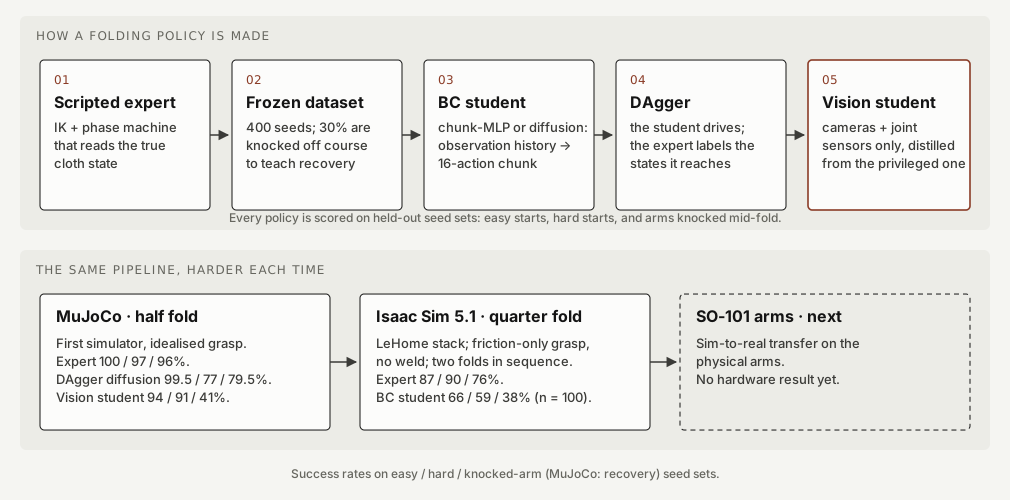
WorldFold pipeline diagram

Figure 1 — One pipeline, run on harder tasks each time.

  • A scripted expert (inverse kinematics plus a phase machine that reads the true cloth state) produces demonstrations. 30% of episodes are knocked off course mid-fold, so the data also shows how to recover.
  • A student learns from them by behaviour cloning, either a chunk-MLP or a diffusion policy that maps a short observation history to the next 16 actions.
  • DAgger closes the gap: the student drives, and the expert labels the states the student actually reaches.
  • A vision student that sees only cameras and joint sensors is distilled from the privileged policy, which is the version that can run on real arms.
  • Every policy is scored on held-out seed sets (easy starts, hard starts, and recovery or an arm knocked mid-fold), with confidence intervals and paired comparisons.

Why PPO failed first

PPO from scratch could not learn to fold. Digging in exposed an unreachable goal, a stalling IK solver, identical reset states and a seeding bug that ran all eight parallel environments on one identical episode, which had invalidated earlier results. A damped-least-squares IK expert, behaviour-cloned, then took corner-fold success from 0% to 83%. Potential-based reward shaping across reach, grasp, carry and place now gives RL a signal that cannot be farmed by re-grasping.

A world model that helps policies learn

A residual MLP over the cloth's physical state predicts held-out fold episodes with a corner error of 10.6 mm at ten steps, against 35.5 mm for simply assuming nothing moves. An earlier latent RSSM lost to that baseline by an order of magnitude; dropping the latent bottleneck and predicting change rather than the whole state fixed it. Training an actor on imagined rollouts through the model raised a behaviour-cloned policy from 17.5% to 87.5% success in one round, and to 95% after a round on its own collected data.
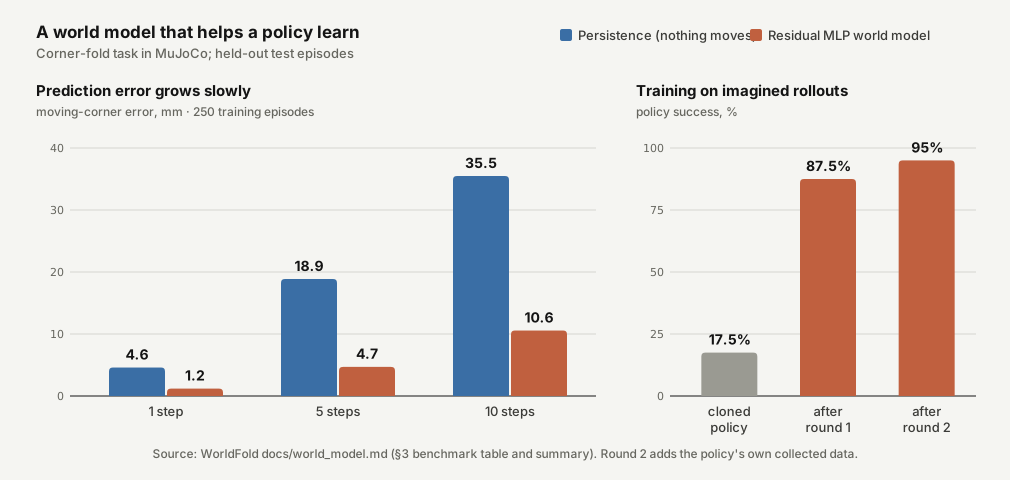
WorldFold world-model results chart

Figure 2 — Prediction error by horizon, and policy success after training in imagination.

Half fold in MuJoCo

The scripted expert sets the ceiling at 100% / 97% / 96% on the easy, hard and recovery sets (n = 200 each). The best privileged policy, a DAgger-trained diffusion policy, reached 99.5% / 77% / 79.5%, lifting recovery from 38.5%. The camera-only student reached 94% / 91% / 41%: strong from shifted starts, still weak at recovering after a knock. Offline RL (IQL) was tried three times, never beat imitation and was dropped.

Quarter fold in Isaac Sim

The project then moved to LeHome's Isaac Sim 5.1 stack, where the grasp is friction-only: nothing welds the cloth to the jaw, so it can slip, drag or fling. The quarter fold chains two folds, and the second has to pick up a strip the first one laid down.

  • Releasing gently mattered most. Changing how the jaws let go lifted the expert from 41% to 92% on hard starts and from 31% to 78% with an arm knocked, on the same 100 paired seeds.
  • A gripper head on the diffusion policy added 16 points.
  • A flatter first fold (friction plus a lay-down move) made every success a real second fold, at no measurable cost.
  • Final held-out sets (n = 100 each): the expert scores 87% / 90% / 76% and the behaviour-cloned student 66% / 59% / 38%.
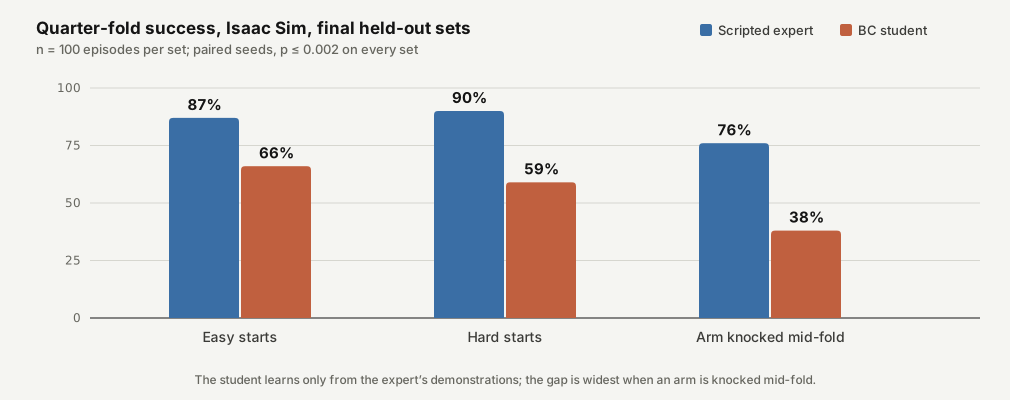
WorldFold quarter-fold results chart

Figure 3 — Quarter-fold success on the final held-out sets.

Not everything worked. A first DAgger round on the quarter fold scored 26% / 28% against the student's 49% / 39%, so it was not kept, and its cause is still open.

Engineering for speed and honest numbers

  • Faster loops: CUDA graphs made diffusion sampling 12.7× faster, and bf16 with batched GPU teacher labels cut distillation time by 29%.
  • More data per hour: Isaac collection runs 8 vectorized environments, 2.15× faster on Windows through D3D12, into a content-hashed, resumable dataset store.
  • Grasps that are physical: friction-only grasping on PhysX particle cloth in Isaac Sim 5.1, checked by a contact audit.
  • Numbers that mean something: a paired-seed harness (Wilson intervals, McNemar tests, paired bootstrap) measured a simulation noise floor of about 7 points, so smaller gains are not claimed.

Where it stands

The privileged quarter-fold result is closed. Next are the camera-only student and a success detector for the quarter fold, then sim-to-real on the physical SO-101 arms; no hardware result is claimed yet.
2024 · Solo hardware · TMU research

Six-axis research arm

A robot arm I designed, machined and wired myself to benchmark analytical against learned inverse kinematics.

I built the arm on my own and implemented both inverse-kinematics approaches in live control as part of TMU's research team.

Year
2024
Result / current state
Closed-form IK reached 3 mm on hardware and neural IK under 6 mm; both beat the Jacobian pseudo-inverse.
Technologies
  • MATLAB / Simulink
  • SOLIDWORKS
  • OpenCV

The question

The study, supporting the Lunar Exploration Rover System tied to NASA's Artemis program, compared analytical and deep-learning inverse kinematics for high-degree-of-freedom arms. A meaningful comparison needed real hardware running both.

What I built

  • The arm: SolidWorks design, CNC machining, wiring and soldering, on CAN BLDC actuators with 14-bit encoders.
  • Control: Simulink bridged to the 1 Mbps CAN bus over UDP, running MPC with inverse-dynamics feedforward on fifth-order torque trajectories.
  • Perception: AprilTag and OpenCV pose estimation.
  • Both IK approaches running in live control on the same setup.

The answer

On the same hardware, closed-form geometric IK reached 3 mm end-effector accuracy and a neural IK model stayed under 6 mm. Both beat the Jacobian pseudo-inverse baseline.

Demonstration

One arm is driven with a PS4 controller while a second tracks its AprilTag marker to within 1 cm.

Results

I co-authored papers in the Journal of Physics: Conference Series (2024) and IJSES (2024), and presented the system at IC-MSQUARE 2024.

2026 · Competition entry

Connectome

Streaming time-series prediction over 31 GB of sequences, with a GRU ensemble squeezed onto one CPU core by a hand-written C kernel.

I trained the models and wrote the inference kernel for a competition entry.

Year
2026
Result / current state
An AVX2/float16 C kernel fits a whole GRU ensemble into a 1-core inference budget; an XGBoost model of the scoring mask reaches AUC .92.
Technologies
  • Python
  • PyTorch
  • C
  • XGBoost

The constraint

A competition entry that predicts the next step of long sequences as they stream in, from 31 GB of training data. Inference has to run on a single CPU core, so a model only counts if it is fast enough to ship.

Streaming GRU ensembles

  • GRUs read each sequence step by step, trained with truncated backpropagation through time.
  • Causal EMA features summarize the recent past without looking ahead.
  • Distillation was part of the training recipe for ensemble members.

One CPU core

To fit the whole ensemble inside the 1-core budget, I wrote the inference path myself: a C kernel using AVX2 vector instructions and float16 arithmetic.

Learning the scoring mask

Not every step counts toward the score. An XGBoost model predicts which steps do from causal features alone, at AUC .92.

Status

The code and models are private, so there is no source link.

2024 · Software lead & captain · 30+ members

FTC competition robotics

Autonomy for competition robots: odometry, sensor fusion, vision and state machines across six seasons.

I wrote the robot's autonomy for six seasons and captained the team from 2021, leading 30+ members.

Year
2024
Result / current state
World Championship #6 of 192 (2023) and #8 of 231 (2024), from 7,000+ teams worldwide.
Technologies
  • Java
  • OpenCV
  • SOLIDWORKS

What I built

  • An autonomy stack combining odometry and IMU fusion, PID control, multithreaded state machines and mecanum drive libraries.
  • AprilTag relocalization on top of odometry and IMU fusion, cutting drift by 43%.
  • Real-time OpenCV game-object detection that selects the autonomous routine at match start.
  • About 50,000 lines of Java across five public seasons, with reusable drive, odometry and PID libraries.
  • Swerve-drive modules in SolidWorks, and a scouting app that logged every team and match in our division for alliance selection.

Results

  • World Championship #6 of 192 (2023) and #8 of 231 (2024), after 20th of 160 in 2022.
  • Three Ontario championships, two Control Awards (FIRST's judged software award) and a 2nd-place Design Award.

These are team results built on everyone's work; the autonomy software was mine.

2026 · Personal project

Job Appy

My own job-search pipeline: pulls postings, ranks my real experience against them, builds a one-page résumé.

Solo project: about 12,000 lines of Python and 3,000 of JavaScript.

Year
2026
Result / current state
633 automated tests. Every résumé line traces to evidence I wrote: the model ranks, it never rewrites.
Technologies
  • Python
  • SQLite

The idea

Language models are good at judging fit and bad at telling the truth about your history. In Job Appy the model may rank bullets from an evidence bank I wrote, but it never rewords them, so every line on a generated résumé traces back to something I actually did.

What it does

  • Collects postings from pasted links or whole job-alert emails, with adapters for Greenhouse, Lever, Ashby, SmartRecruiters and LinkedIn and page extraction as a fallback. A bookmarklet reads WaterlooWorks postings inside the signed-in tab.
  • Scores each job against the evidence bank and generates a tailored LaTeX résumé and cover letter.
  • A one-page fitter compiles the LaTeX and trims the lowest-ranked bullets until the page fills exactly.

Job Appy pipeline diagram

Figure 1 — From posting to a one-page résumé, with the safeguards around it.

Engineering

  • Names, emails and phone numbers are scrubbed from every model request.
  • Gemini runs with JSON-schema structured output. Quota exhaustion, transient errors and retired models are classified, so the app degrades to a deterministic path instead of breaking.
  • A standard-library Python backend over a 15-table SQLite schema.
  • Transport seams let tests run ingestion and model clients against fakes, and an automated check enforces the architecture's module boundaries.

Result

It is the tool I use for my own applications, backed by 633 tests.

2026

LLM-assisted CRM query system

Plain-English questions over messy CRM data, without ever letting the model write database code.

Designed the LLM mapping contract, extractive parsing prompts and query planner.

Year
2026
Result / current state
A roughly 2,200-line query-planning module includes structural and integration tests.
Technologies
  • Python
  • OpenAI API
  • PostgreSQL
  • Firebase / Firestore
  • JSON Schema

Questions over messy exports

The pipeline turns CSV and XLSX CRM exports into validated records and answers natural-language questions over the normalized data.

My contribution

I designed the column-mapping contract, extractive parsing prompts and query-planning module. Teammates built the deterministic importer, deduplication, reporting and Streamlit app.

Confidence bands and validated plans

Mapping uses confidence bands: automatic above 0.90, flagged from 0.70 to 0.89 and rejected below 0.70, with a 0.90 floor for identity fields. The planner validates GPT-4o’s JSON plan before translating it into a Firestore query.

LLM-assisted CRM query system method diagram

Figure 1 — Ingestion once per export; a validated plan for every question.

No model-written queries

The system keeps model suggestions inside JSON Schema and query-plan boundaries, so no raw executable query is model-written. It was a UW Data Science Club team project from January to April 2026.

2026 · Analysis engine · weekend team build

MooseTrax

Upload a workout video and get rep-by-rep form scores and an annotated replay with coaching cues.

Built with a team over a weekend in January 2026; I wrote the analysis engine and the alignment and coaching pipeline.

Year
2026
Result / current state
Scores every rep on joint form (70%) and left–right symmetry (30%) against a time-warped reference rep.
Technologies
  • Python
  • FastAPI
  • MediaPipe
  • OpenCV

How it works

MediaPipe extracts pose landmarks from the video. My analysis engine turns them into eight joint angles plus per-keypoint speed, acceleration and left–right symmetry, detects each repetition and time-warps a reference rep onto every user rep.

MooseTrax pipeline diagram

Figure 1 — From workout video to a coached replay, and how one rep is scored.

What I built

  • Confidence pruning and temporal filtering that stabilize noisy landmarks.
  • Rep scoring (70% joint form, 30% symmetry) that flags frames outside tolerance and names the three most deviating joints.
  • Schema-validated coaching from Gemini 2.5 Flash through Instructor and Pydantic, grounded in a cue bank of safety principles.
  • Timestamped coaching events burned into an OpenCV-annotated replay.

MooseTrax joint-angle chart

Figure 2 — The scored elbow angle through one clip, with the rep the pipeline detected.

FastAPI connects the pipeline to a web frontend and a Supabase-backed progress dashboard.

Limits

This is a weekend prototype for exploring exercise feedback, not a clinically validated assessment. Pose estimation and the chosen reference rep bound what the comparison can say.

2026

Orbit Wars

Solo Kaggle strategy agent that ranked in the top 250 of 4,700+ teams before the finals.

Built the solo planning agent and Flask replay tooling.

Year
2026
Result / current state
Ranked around the top 250 of more than 4,700 teams before the finals.
Technologies
  • Python
  • Flask
  • JavaScript

What it does

Orbit Wars is a real-time strategy game where fleets capture orbiting planets, manage production and avoid comet and sun geometry.

My contribution

I built the solo heuristic agent, strategy modules and Flask plus Canvas replay visualizer. The agent uses no learned model.

Technical highlight

Seven weighted value functions score threat, safety and production. Iterative intercept aiming predicts moving targets, and segment checks reject unsafe fleet paths.

Orbit Wars strategy diagram

Figure 1 — One turn of the agent, with the composite value weights from the scoring code.

Results and status

The agent reliably beat Kaggle’s starter agent and ranked around the top 250 of 4,700-plus teams before the finals. It was a completed competition entry, not a production game system.

2026

WATonomous navigation stack

ROS 2 C++ navigation for a simulated robot: lidar costmap, mapping, A* planning and pure pursuit.

Implemented four C++ packages on the team’s starter template.

Year
2026
Result / current state
An 8-connected planner reroutes blocked goals to reachable free cells.
Technologies
  • C++
  • ROS 2
  • Gazebo
  • Docker
  • Foxglove

Lidar to velocity commands

The stack drives a simulated robot through Gazebo using lidar-derived obstacle costs, a remembered map, global planning and a pure-pursuit controller.

My contribution

For WATonomous onboarding, I implemented the lidar costmap, map-memory node, A* planner and pure-pursuit controller in C++ on the team’s starter template.

A planner that reroutes blocked goals

The planner uses an 8-connected occupancy grid, snaps blocked starts to free cells and reroutes unreachable goals. Tapered obstacle inflation keeps paths clear of walls.

WATonomous navigation stack diagram

Figure 1 — Four nodes from lidar to velocity commands, with the parameters from the code.

Simulation only

This is a simulated onboarding project. It demonstrates the navigation stack and its recovery rules; it is not a deployed autonomous vehicle.

2025

Badminton motion analysis

Court mapping and player tracking from match footage, for a proposed robot coach.

Built the video-analysis pipeline for a Junior CAN AI team project.

Year
2025
Result / current state
A constant-velocity Kalman filter tracked player motion at 30 fps.
Technologies
  • Python
  • OpenCV
  • YOLOv8
  • PyTorch

A coach that picks the next shot

The project explored an AI badminton coach that could watch a player and eventually choose challenging shuttle placements for a robot.

My contribution

I built court-corner detection, homography mapping, player and shuttle tracking and temporal motion analysis in Google Colab.

From match footage to court coordinates

CLAHE, HSV line masks and geometry recover court coordinates. YOLOv8 pose keypoints feed a confidence-gated Kalman filter and EMA smoothing; TrackNetV3 handles shuttle tracking.

Badminton motion analysis method diagram

Figure 1 — From match footage to court-space tracks; the robot coach is proposed, not built.

Why there is no headline number

The work remained an exploratory team project and did not become a finished coaching product. No headline performance metric is claimed.

2025

ChessHacks 2025

Hackathon chess engine with Stockfish-labelled self-play data, a ResNet evaluator and alpha-beta search.

Built the data generator, trainer and search bot as part of a four-person team.

Year
2025
Result / current state
The policy head covers 20,480 chess moves with a clipped centipawn value head.
Technologies
  • Python
  • PyTorch
  • Stockfish

Self-play, labelled by Stockfish

The project trains a chess bot from self-play positions labelled by Stockfish, then uses the network inside a search procedure to choose moves.

My contribution

I built the sharded self-play data generator, ResNet policy-value trainer and bot search layer within a four-person hackathon team.

Temperature and Dirichlet noise diversify generated games. The model predicts a 20,480-way move policy and clipped centipawn value, while negamax alpha-beta search uses a transposition table.

ChessHacks 2025 engine diagram

Figure 1 — Data, model and search, with the settings from the training and bot code.

How it did

The team’s competition result was weak, but the pipeline provided a substantial end-to-end training and inference experiment.

2025

Hint-to-word retrieval

Matches cryptic hints to words offline under a 1B-parameter cap, at 2.8× the baseline score.

Built the retrieval pipeline and alternative ranking experiments for an IOAI task.

Year
2025
Result / current state
Reached 0.83 NDCG@10 against a 0.30 baseline.
Technologies
  • Python
  • PyTorch
  • Sentence-BERT

Hints in, words out, offline

The system ranks candidate words for an indirect hint while operating offline and below a one-billion-parameter model budget.

My contribution

I implemented SBERT embedding retrieval, cosine-similarity candidate ranking and alternative retrieval heads, including UMAP and KMeans experiments.

Contrastive tuning under a 1B cap

Contrastive fine-tuning improves the embedding space without relying on a large general model, keeping inference within the task constraints.

Hint-to-word retrieval pipeline diagram

Figure 1 — Offline tuning, then retrieval under the 1B-parameter cap.

2.8× the baseline

The retrieval pipeline reached 0.83 NDCG@10 against a 0.30 baseline in the IOAI task. Hint-to-word retrieval results chart

Figure 2 — NDCG@10 against the baseline.

2025

Satellite rainfall segmentation

Finds rain in 18-channel satellite imagery: 0.86 IoU against a 0.20 baseline.

Built the segmentation model and inference pipeline for an IOAI task.

Year
2025
Result / current state
Reached 0.86 IoU against a 0.20 baseline.
Technologies
  • Python
  • PyTorch

What it does

The model segments rainfall in satellite imagery where precipitation is rare and spatially sparse, making an all-background prediction deceptively competitive.

My contribution

I built the SE-ResNet encoder, U-Net decoder, patch-stitch inference and spectral re-weighting for an IOAI 2025 task.

Technical highlight

The pipeline uses 18 GOES-16 channels and emphasizes precipitation-sensitive infrared bands to counter the class imbalance.

Results and status

The model reached 0.86 IoU against a 0.20 baseline under the task’s offline compute limits.